
MuscleMap Blog
Resources for massage therapists and physical therapists
How Do You Measure Muscle Stiffness in a Frozen Shoulder Patient?
5 min read
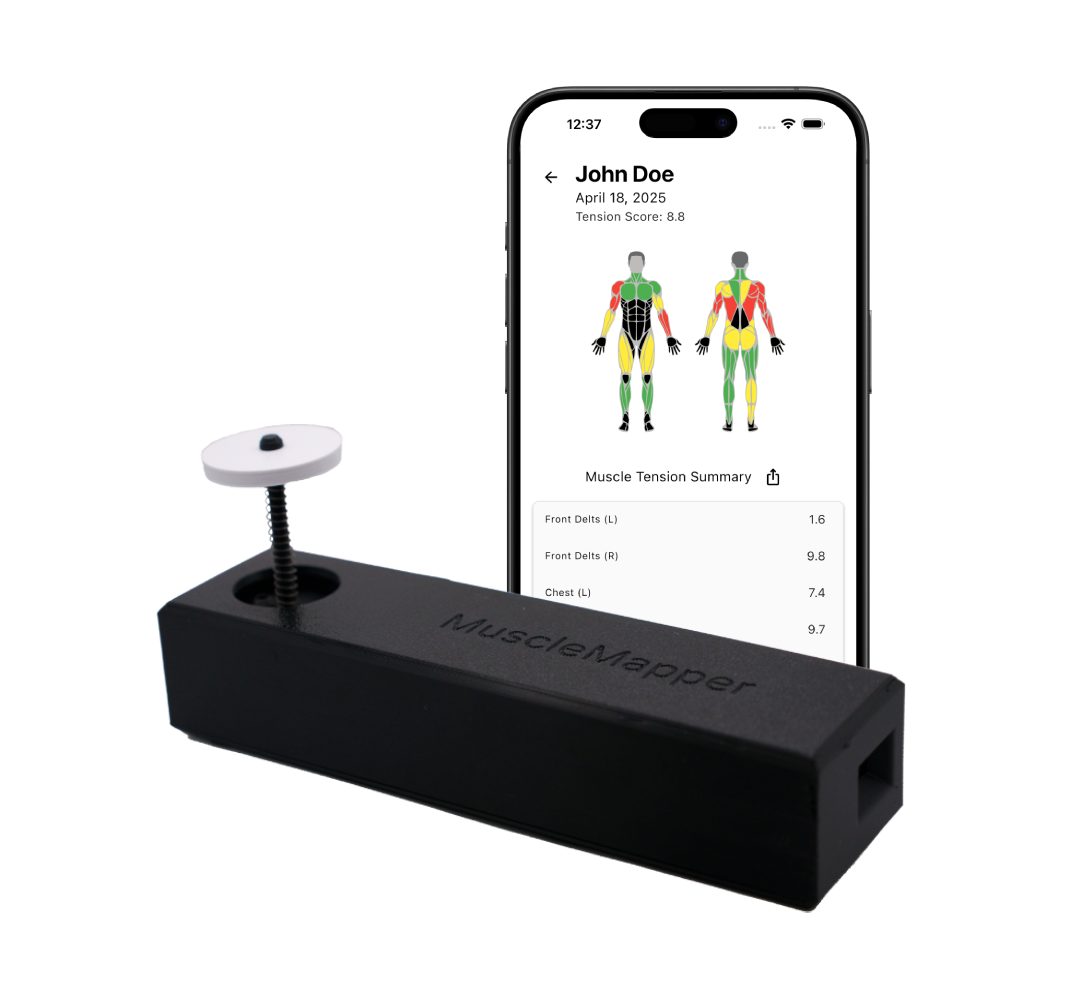
Measure the anterior deltoid and the latissimus dorsi, and take both sides every time. Research found both were significantly stiffer on the affected side.
Do Patients Get Tired of Repeated Outcome Measure Testing?
5 min read
Yes, and it shows up as falling completion rates rather than complaints. Patients rarely say they are tired of the forms. They just stop filling them in.
What Do Patients Actually Mean When They Say a Muscle Feels Stiff?
5 min read
They almost always mean restricted movement, not tissue mechanics. You are measuring a mechanical property. They are reporting a functional one.
How Do You Keep a Chiropractic Patient After Their Insurance Visits Run Out?
5 min read
Show the patient what changed and what has not, several visits before the last covered visit. In 2025, 38% of patients skipped needed care over cost.
Does the Menstrual Cycle Affect Muscle Stiffness Readings?
4 min read
It may, but the effect looks small and inconsistent between individuals, and smaller than confounders you already control.
Do Scoliosis Patients Have Asymmetric Paraspinal Muscle Stiffness?
5 min read
Yes, but the stiffer side is not the same for every muscle, and the gap tracks with curve severity.
Do Older Chiropractic Patients Drop Out More Than Younger Patients?
5 min read
The evidence does not support that assumption. A 2025 chiropractic study with a mean patient age of 69 reported 90% program completion.
Does the Adjustment Technique You Use Affect Chiropractic Outcomes?
5 min read
Largely no. A 2025 network meta-analysis of 161 trials and 11,849 patients found differences between approaches were not clinically relevant.
Does Fat Inside the Muscle Affect Stiffness Readings?
5 min read
Likely yes. A 2025 study found greater fat infiltration in the lumbar multifidus was significantly associated with higher measured stiffness.
Does Sending Patients a Recap After Their Visit Improve Chiropractic Retention?
5 min read
Probably, but only if the recap carries something the patient did not already know. A reminder is not progress feedback.
How Do Physical Therapists Show Patients They Are Making Progress?
5 min read
By repeating the same measure and showing the patient the comparison. Collecting a score changes nothing unless the result goes back to the patient.
How Do You Track Progress for a Chiropractic Patient With More Than One Complaint?
5 min read
Track each region separately and name one primary complaint. A blended score hides the region that is actually moving.
Do Rewards and Gamification Improve Chiropractic Patient Retention?
5 min read
Points, streaks and rewards raise engagement in rehabilitation research, but their effect on clinical outcomes is inconsistent.
What Is the Difference Between a Tissue Hardness Meter and a Myotonometer?
5 min read
A tissue hardness meter presses a probe into tissue and reports resistance. A myotonometer taps it and reads the oscillation that comes back.
Can You Measure Muscle Stiffness in Children?
5 min read
Handheld myotonometry has been used in paediatric populations with reported reliability, but paediatric reference values barely exist.
Should the Same Person Take Every Muscle Stiffness Measurement?
5 min read
Where practical, yes. But it is a preference, not a requirement, and a written protocol closes most of the gap between staff.
Does Setting a Goal With the Patient Improve Chiropractic Retention?
5 min read
Yes, but the effect is small and conditional. The version that works is a goal you can check at a re-exam.
Can You Compare Muscle Stiffness Readings From Two Different Devices?
5 min read
No. Two devices measuring the same muscle give different numbers, and the gap between them is systematic bias, not random error.
Can You Measure Soft Tissue Stiffness Through Clothing?
5 min read
No. Handheld stiffness measurement requires direct skin contact, and no study has validated readings taken through fabric.
Has Myotonometry Been Studied in Chiropractic Patients Specifically?
5 min read
Barely, if you require the word chiropractic on the paper. The instrument evidence is substantial, but almost none of it was run in chiropractic settings.
Is Chiropractic Patient Dropout a Scheduling Problem or a Belief Problem?
5 min read
Mostly a belief problem. When researchers interviewed patients who never came back after an initial evaluation, 26.9% cited access issues.
Why Do Studies on Muscle Stiffness and Pain Reach Conflicting Conclusions?
5 min read
Because the studies are not measuring the same thing.
Which Muscle Stiffness Measurement Method Should a Physical Therapy Clinic Choose?
5 min read
For routine outpatient use, handheld myotonometry is the practical choice.
Which Chiropractic Patient Retention Strategies Are Actually Supported by Evidence?
5 min read
Almost none of the standard list has been tested on chiropractic patients.
Do Physical Therapists Use Outcome Measures Consistently?
4 min read
They use them almost universally, but they do not agree that anyone administers them the same way.
Which Patients Are Most Likely to Drop Out of Physical Therapy?
4 min read
Younger patients with low self-efficacy, higher depressive symptoms, and a heavy treatment burden are most likely to drop out.
Which Techniques Actually Improve Patient Adherence to a Treatment Plan?
4 min read
Booster sessions, supervision, graded progression, goal setting, and feedback, stacked together rather than used alone.
Can Myotonometry Diagnose a Condition, or Only Track Change?
6 min read
Only track change. In a blinded study of 52 patients across five neuromuscular disease groups, myotonometry could not separate patients from controls.
Do Patient Expectations Predict Chiropractic Treatment Outcomes?
6 min read
They predict what the patient reports more than what the tissue does. A 2025 review found fulfilled expectations tracked with greater satisfaction.
How Many Outcome Measures Should a Chiropractor Use Per Patient?
6 min read
One or two, re-checked unchanged at every re-examination. Research found a negative association between question burden and completion rate.
Does Myofascial Release Reduce Muscle Stiffness?
7 min read
Yes, immediately, when it is done by hand. A 2025 study found manual release dropped erector spinae stiffness while a tool-assisted version did not.
Does a Massage Gun Reduce Muscle Stiffness?
6 min read
Yes, in the short term. Percussive therapy cut measured hamstring stiffness by about 6%, but it did not beat foam rolling or reduce soreness.
Do Patient Portals and Online Scheduling Improve Chiropractic Patient Retention?
7 min read
They reduce missed appointments, not early discharge. Portal users were 21.5% less likely to no-show, but 58% of dropout is perception-based.
What Is Patient Visit Average in Chiropractic and How Do You Improve It?
7 min read
Patient visit average is total visits divided by unique patients over a set period, and national data puts the typical patient near 8 visits a year.
What Is the Global Rating of Change Scale and Should Chiropractors Use It?
7 min read
The Global Rating of Change scale is a single question asking a patient how much better or worse they are since a reference point.
How Soon After Treatment Does a Muscle Stiffness Reading Change?
6 min read
Stiffness readings can change within minutes of manual therapy, but short-term drops can return toward baseline within about 24 hours.
Does Hydration Affect Muscle Stiffness Measurements?
6 min read
Hydration status may shift a soft tissue stiffness reading, and it shifts it in the direction most people do not expect.
How Do You Measure Pectoralis Minor Stiffness in Physical Therapy?
6 min read
Place a handheld myotonometer medial and inferior to the coracoid process, with the patient supine and the arm fully relaxed.
How Do You Measure Adductor and Groin Stiffness in Physical Therapy?
6 min read
Measure the adductor longus supine with hips neutral. Hip position changes this reading more than it changes most muscles.
How Do You Explain to a Chiropractic Patient That Their Stiffness Reading Went Up?
6 min read
Show the number, name the likely explanations before the patient guesses at one, and say what you are changing because of it.
Does Poor Sleep Affect Muscle Stiffness?
5 min read
Sleep loss reliably changes how stiff a patient feels. Whether it changes measured tissue stiffness is a separate and much thinner question.
Does Temperature Affect Muscle Stiffness Measurements?
6 min read
Tissue temperature is a recognized influence on viscoelastic measurement, and myotonometry guidance recommends standardizing it before measuring.
Does Seeing the Same Chiropractor Every Visit Affect Patient Retention?
6 min read
Provider continuity is linked to lower costs and fewer surgeries in low back pain, and the mechanism is a consistent message rather than the identity of the doctor.
Should You Show a Chiropractic Patient Raw Stiffness Numbers or a Simplified Report?
6 min read
Match the format to the amount of data, not to the patient. Plain tables suffice for simple results while trend visualizations work better for long-term data.
Does Recent Exercise Affect a Muscle Stiffness Measurement?
5 min read
Yes, and by more than most measurement error. A 2026 crossover trial found myotonometry stiffness rose roughly 20% after a bout of calf raises.
Is There Research Showing Chiropractic Care Changes Anything Besides Pain?
7 min read
A 2025 randomized trial found chiropractic care shifted biomarkers linked to neuroplasticity, inflammation, and stress.
What Is the MAINTAIN Instrument and Can It Improve Chiropractic Retention?
7 min read
MAINTAIN is an intake screening questionnaire that flags which spinal pain patients may benefit from maintenance care.
Should You Measure Muscle Stiffness at Rest or During Contraction?
7 min read
Measure at rest if you plan to track the patient over time. Contraction raises readings and lowers reliability.
Do Evening and Weekend Hours Reduce Chiropractic Patient Dropout?
6 min read
They fix the access problem, which is the smaller half of the problem. Extended hours improve attendance for patients whose barrier is a scheduling conflict.
How Do You Explain a Stiffness Reading That Improved While the Patient's Pain Has Not?
6 min read
Tell the patient the divergence is expected, because the research says it is. Two separate variables moved separately.
Surface EMG vs Myotonometry: Which Tracks Chiropractic Progress Better?
7 min read
They measure two different variables, so neither one replaces the other. Only one of them has published reference values.
Do Patient Feedback Surveys Improve Chiropractic Patient Retention?
6 min read
Surveys fix the parts of the experience patients are willing to complain about. That is a real category, and also the smaller one.
What Is the Difference Between Muscle Stiffness, Tenderness, and Pain?
6 min read
They are three separate findings measured three different ways, and research repeatedly finds they do not move together.
Does Pre-Scheduling a Full Block of Visits Reduce Chiropractic Patient Dropout?
6 min read
Pre-scheduling reduces missed visits. It delays dropout more than it prevents it.
Does Time of Day Affect Muscle Stiffness Measurements?
6 min read
Yes. Resting muscle tone follows a daily rhythm, running lower in the morning and higher in the late afternoon.
Is the Stiffness You Feel Muscle or Fascia?
6 min read
It is both, and nothing you do with your hands can separate them. Skin, fascia, and muscle sit in series under every palpating thumb.
Do Long Wait Times Cause Chiropractic Patients to Drop Out?
6 min read
Wait times speed dropout up, they rarely start it. A long wait makes an already wavering patient decide sooner.
Do Prepaid Packages and Loyalty Programs Improve Chiropractic Patient Retention?
8 min read
They help one group of patients, and it is a smaller group than most practices assume. Financial incentives produce consistent but modest adherence gains.
Do Fibromyalgia Patients Have Stiffer Muscles?
7 min read
In the published myotonometry data, yes. A 2026 case-control study of 31 fibromyalgia patients found significantly higher tone and dynamic stiffness.
Does Cervical Traction Reduce Neck Muscle Stiffness?
8 min read
Yes, but only while the pull is on. A 2025 shear wave elastography study found stiffness returned to baseline once the session ended.
How Do You Measure Muscle Stiffness in Stroke Patients With Spasticity?
8 min read
Take the reading at a marked point over a relaxed muscle belly, with the limb supported at a fixed joint angle, and compare each result to that patient's own baseline.
Do Tension Headache Patients Have Stiffer Neck Muscles?
7 min read
Often yes, and the stiffer muscle depends on the headache type.
How Do You Measure Forearm Extensor Stiffness in Tennis Elbow Patients?
8 min read
Mark a point on the extensor muscle bulk about four to five centimeters distal to the lateral epicondyle, with the forearm supported and pronated and the wrist fully relaxed.
How Do You Document Muscle Stiffness in a Physical Therapy SOAP Note?
7 min read
Write it in the objective section as a number with a named site, a patient position, and a comparison to baseline.
How Often Should a Physical Therapist Re-Measure Muscle Stiffness?
7 min read
Every two to four weeks for most outpatient caseloads, plus a baseline at evaluation and a reading at discharge.
How Do You Measure Infraspinatus Stiffness in Shoulder Pain Patients?
7 min read
Place the probe in the infraspinous fossa with the patient prone, and know that a stiffness number does not identify a trigger point.
What Retention Metrics Should a Chiropractic Practice Track?
7 min read
Track five: rebooking rate, visit drop analysis, patient visit average, inactive patient count, and plan completion rate.
Muscle Tone vs Stiffness vs Elasticity: What Is the Difference?
7 min read
They are three separate parameters of the same tissue, reported in three different units: hertz, newtons per meter, and a ratio.
Does Instrument-Assisted Soft Tissue Mobilization Reduce Muscle Stiffness?
7 min read
Not reliably, at least not the stiffness you can measure: trials show better range of motion without a change in tissue stiffness.
Does Subcutaneous Fat Affect Muscle Stiffness Measurements?
7 min read
Yes, and it pushes the number down, which makes raw readings unsafe to compare between patients but still usable across visits.
Why Do Physical Therapy Patients Stop Coming Before Discharge?
7 min read
Because most patients judge therapy by how they feel, and feeling is a poor guide to whether the episode is finished.
How Do You Respond When a Chiropractic Patient Says They Cannot Afford to Continue Care?
6 min read
Find out whether the objection is about the amount, the timing, or the value, because those need three different answers.
How Do You Measure Plantar Fascia Stiffness in Patients With Plantar Fasciitis?
6 min read
Measure the medial band prone, with the ankle in neutral, at a point you mark from the medial calcaneal tubercle.
Does Strength Training Increase Muscle Stiffness?
6 min read
Acutely yes, and which session the patient did matters more than whether they trained at all.
Does Reducing Muscle Stiffness Reduce Pain?
6 min read
No, not reliably. Research has lowered soft tissue stiffness without a matching drop in reported pain, and in one trial stiffness rose while pain fell.
How Do You Measure Sternocleidomastoid Stiffness in a Patient With Neck Pain?
7 min read
Measure at the mid-belly with the patient relaxed and the head neutral, then take the same reading on the opposite side. Consistency beats any single number.
How Many Spots on a Muscle Should You Measure for a Reliable Stiffness Reading?
7 min read
One point is enough to track a patient over time, but only if you return to the exact same point every visit. Where you place the probe can matter more than who you measure.
Does Muscle Stiffness Increase With Age?
6 min read
In many superficial and postural muscles, stiffness does tend to rise with age. But the pattern is not universal, and here is what the measurement research shows.
How Do You Measure Deltoid Muscle Stiffness in Physical Therapy?
6 min read
Measure deltoid stiffness with a handheld myotonometer over the belly of the target head, with the arm relaxed. Here is probe placement and reliability.
What Are the Early Warning Signs a Chiropractic Patient Is About to Drop Out?
6 min read
The clearest early warning signs are behavioral: a missed or rescheduled third visit and going quiet when you ask about progress.
How Do You Handle a Chiropractic Patient Who Keeps Rescheduling Appointments?
6 min read
Treat repeated rescheduling as an early dropout signal, not a scheduling quirk. Most patients who keep moving the visit have stopped seeing a reason to hold it.
Is Patient-Reported Stiffness a Reliable Outcome Measure in Chiropractic?
6 min read
Patient-reported stiffness is a useful outcome, but not a reliable stand-in for measured tissue stiffness. Track it, but pair it with an objective channel.
How Do You Measure Rhomboid Muscle Stiffness in Physical Therapy?
6 min read
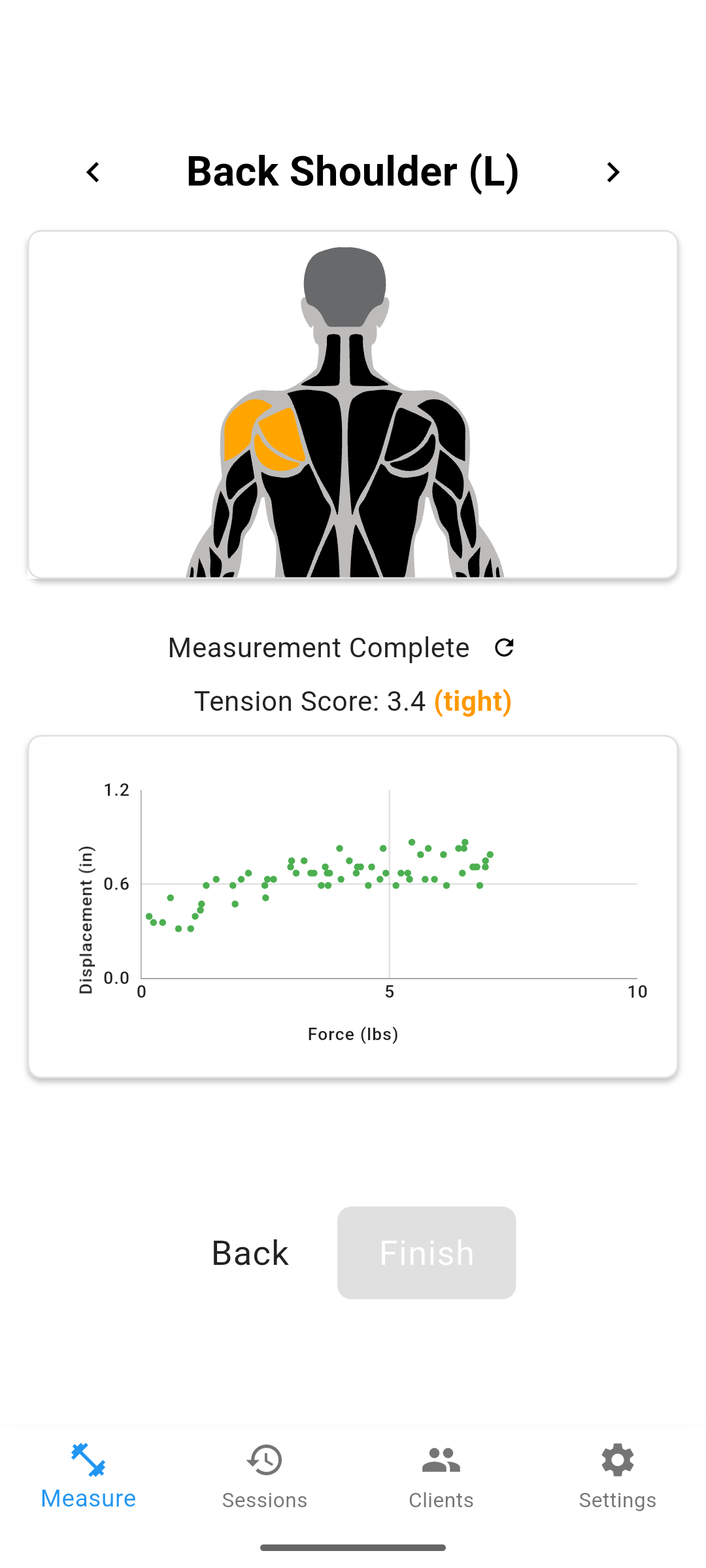
Measure rhomboid stiffness with a handheld myotonometer over the muscle belly, between the medial scapular border and the spine, with the patient prone.
Does Remote Therapeutic Monitoring Improve Chiropractic Patient Retention?
6 min read
The early evidence points that way. Remote monitoring keeps patients engaged between visits, which is when most quiet dropout happens.
Does the Painful Side of the Neck Have Stiffer Muscles?
6 min read
Not consistently. In chronic neck and back pain, the more painful side often shows no higher muscle stiffness than the less painful side.
Why Do Chiropractic Patients Quietly Stop Coming Without Telling You?
6 min read
Most patients who quit never give a reason. They just stop booking, usually between the third and sixth visit. Here is why, and how to catch it early.
Does Cupping Therapy Reduce Muscle Stiffness?
6 min read
Cupping can lower measured soft tissue stiffness, but the effect is short-lived and does not track with pain relief. Here is what objective studies show.
How Do You Measure Levator Scapulae Stiffness for Neck Pain?
6 min read
How to measure levator scapulae stiffness, why reliability drops in chronic cases, and how to use readings without over-reading them.
Does Trigger Point Therapy Reduce Muscle Stiffness?
5 min read
Trigger point compression can measurably lower muscle stiffness in a single session. Here is what myotonometry studies show and how to track whether it holds.
Does Massage Reduce Muscle Stiffness?
6 min read
Massage can reduce measured soft tissue stiffness, but the effect is often modest and short-lived. Here is what objective studies show and how to track it.
Does Stress Cause Muscle Stiffness?
6 min read
Psychological stress may raise muscle tone and stiffness. Here is what objective measurement studies show and how to separate stress-driven tightness from other causes.
How Do You Measure Gluteus Medius Stiffness in Physical Therapy?
6 min read
Measure gluteus medius stiffness with a handheld myotonometer over the muscle belly in side-lying. Here is the protocol, evidence, and how to track change.
How Do You Measure Achilles Tendon Stiffness in Physical Therapy?
6 min read
Measure Achilles tendon stiffness with shear wave elastography or a handheld myotonometer, ankle in neutral, probe about 2 cm above the calcaneal insertion.
How Do You Measure Psoas Major Stiffness in Low Back Pain Patients?
6 min read
Measure psoas major stiffness with shear wave elastography, using a standardized position and averaged readings, since the muscle is too deep to palpate.
Does Muscle Stiffness Differ Between Men and Women?
5 min read
On average, measured muscle stiffness tends to be higher in men than women. A 2025 study found sex was the only significant predictor of resting stiffness.
Does Foam Rolling Actually Reduce Muscle Stiffness?
6 min read
Foam rolling can lower measured muscle stiffness, but the effect is usually small and short-lived, and the looseness comes partly from the nervous system.
How Do You Measure Tibialis Anterior Stiffness in Physical Therapy?
6 min read
Measure the tibialis anterior with a handheld myotonometer or shear wave elastography, at a standardized position with the ankle relaxed.
Does Dry Needling Reduce Muscle Stiffness?
6 min read
Dry needling may reduce muscle stiffness in the short term, mainly at latent trigger points, but the evidence is low certainty.
How Do You Measure Piriformis Muscle Stiffness in Physical Therapy?
6 min read
Measure piriformis stiffness with a handheld myotonometer through the gluteal tissue, prone with hips neutral, comparing the affected side to the unaffected side.
Does Stretching Actually Reduce Muscle Stiffness, or Just Increase Tolerance?
6 min read
Stretching does slightly reduce measured muscle stiffness, but most of the range-of-motion improvement people feel comes from increased stretch tolerance.
Can Chiropractors Bill Insurance for Soft Tissue Stiffness Testing?
5 min read
There is no dedicated CPT code for myotonometer-based soft tissue stiffness testing. Most practices document it as part of the E/M visit rather than billing it separately.
How Do You Measure Quadriceps Muscle Stiffness in Physical Therapy?
6 min read
Measure quadriceps stiffness with a handheld myotonometer at the vastus lateralis or rectus femoris belly, relaxed and non-weight-bearing, taking 3 to 5 readings per site.
How Do You Handle a Chiropractic Patient Who Feels Tired or Drained After an Adjustment?
5 min read
Post-adjustment fatigue is common and usually temporary. Explain the likely mechanism, distinguish it from a bad reaction, and use objective data to keep the patient in care.
How Do You Respond When a Chiropractic Patient Feels Like Every Patient Gets the Same Care Plan?
5 min read
Show the patient their own numbers, not a script. Individualized re-exam data is the fastest way to counter the "cookie-cutter care plan" objection.
Can You Measure Masseter (Jaw) Muscle Stiffness for TMJ Patients?
6 min read
Yes, you can. A handheld myotonometer reads masseter stiffness in N/m from a light tap on the cheek. Here is the placement protocol and the 2025 reliability evidence.
How Do You Measure Calf (Gastrocnemius) Muscle Stiffness?
6 min read
The practical answer is a handheld myotonometer on the relaxed gastrocnemius belly, 3 to 5 readings averaged and recorded in N/m. Here is the protocol and the evidence.
Why Do Chiropractic Patients Switch to Another Chiropractor, and How Do You Prevent It?
6 min read
Patients rarely switch over the adjustment itself. They switch when they feel unheard, cannot see the next step, or are not convinced the care is working.
How Do You Measure Hamstring Stiffness in Physical Therapy?
6 min read
The practical answer is a handheld myotonometer on the relaxed hamstring belly, 3 to 5 readings averaged and recorded in N/m. Here is the protocol and the evidence.
Why Does a Patient Feel Stiff When Their Stiffness Measurement Is Normal?
6 min read
Because felt stiffness is built in the brain, not read directly off the tissue. A patient can feel tight while an objective reading comes back normal.
What Is the Roland-Morris Disability Questionnaire and How Do Chiropractors Use It?
6 min read
The Roland-Morris Disability Questionnaire is a 24-item self-report tool that measures how much low back pain limits everyday activity, scored 0 to 24.
Do Patients With Low Back Pain Actually Have Stiffer Muscles?
6 min read
It depends on the muscle and the method. Deep-tissue methods often find elevated stiffness, surface methods often find none, and stiffness never maps cleanly onto pain.
Myotonometry vs Range-of-Motion Testing: Which Tracks Chiropractic Progress Better?
6 min read
Neither wins, because they measure different properties. A patient can gain range while stiffness stays elevated, so the fullest progress picture uses both.
How Much Does a Muscle Stiffness Reading Need to Change to Be Meaningful?
6 min read
A change counts once it clears the minimal detectable change for that muscle and device. Below that threshold, a difference may just be measurement noise.
How Do You Handle a Chiropractic Patient Who Only Comes In When They're in Pain?
6 min read
Give the pain-only patient a second signal besides pain, so care is tracked between flare-ups instead of triggered by them.
How Do You Measure Lumbar Multifidus Stiffness in Chiropractic Practice?
6 min read
Measure at a fixed site, from a baseline, with consistent probe placement. Handheld myotonometry and shear wave elastography are the two practical methods.
Does Thoracolumbar Fascia Stiffness Relate to Chronic Low Back Pain?
6 min read
In chronic low back pain, fascia stiffness can track with pain and disability, but the two signals often diverge, so measure both.
How to Keep Chiropractic Patients From Dropping Off Over Summer
6 min read
Summer dropout is predictable: travel breaks the rhythm and warm weather makes patients feel better, so they self-discharge. A reason to return blunts both.
Why Chiropractic Patients No-Show and How to Reduce It
6 min read
Most chiropractic no-shows come from scheduling friction and lost motivation. Pre-booking and reminders fix forgetting; a visible reason to return fixes the rest.
Tensiomyography vs Myotonometry: Which Measures Stiffness for Chiropractic?
6 min read
Tensiomyography measures contractile response to a stimulus; myotonometry measures resting stiffness. Here's which fits chairside chiropractic assessment.
How to Talk to a Chiropractic Patient Who Only Wants Pain Relief
6 min read
Agree with the goal first, then change the evidence the patient uses to judge it. A patient who wants pain relief is not wrong, but pain is an unreliable signal.
How to Document Medical Necessity for Continued Chiropractic Care
6 min read
Medical necessity rests on objective change over time, not a repeated pain score. Here is how to build a defensible record beyond what a patient reports.
How to Build an Objective Baseline for a New Chiropractic Patient
6 min read
Capture a small set of repeatable measures before you treat anything. A baseline is the reference point every future re-exam is judged against.
How Do You Measure Left-Right Muscle Stiffness Asymmetry in a Chiropractic Patient?
7 min read
Measure each side with a myotonometer at the same landmark and position, then compare the two readings as a percentage difference.
What Drives Chiropractic Patient Satisfaction Beyond Pain Relief?
7 min read
Satisfaction runs on communication, the therapeutic alliance, and visible evidence of progress, not pain relief alone.
Do Long Chiropractic Care Plans Hurt Patient Retention?
7 min read
Length alone is not what drives patients out. Unexplained length without visible progress is.
What is the Neck Disability Index (NDI) and How Do Chiropractors Use It?
8 min read
The Neck Disability Index is a validated 10-item questionnaire that scores how much neck pain limits a patient's daily activities, from 0 to 100 percent disability.
How Do You Respond When a Chiropractic Patient Says They Have Hit a Plateau?
8 min read
Respond by re-measuring before you reassure. A plateau is a claim about change over time, so answer it with the change over time rather than reassurance.
How Does Erector Spinae Stiffness Change After a Chiropractic Adjustment?
8 min read
Manual soft tissue work can reduce erector spinae stiffness in the short term, and a myotonometer lets you measure it. A stiffness drop is one data point, not proof of outcome.
How Do You Handle a Chiropractic Patient Whose Pain Is Improving But Their Stiffness Is Not?
8 min read
Treat both findings as real, name the divergence directly, and let the data set the case for the rest of the plan. Pain and stiffness measure different things.
How Do You Respond When a Chiropractic Patient Blames an Adjustment for Making Them Worse?
8 min read
Validate the experience, screen for red flags, then re-measure baseline objective findings before deciding whether to change the plan. Post-adjustment soreness is common and usually transient.
How Do You Use the Oswestry Disability Index (ODI) in Chiropractic Practice?
8 min read
Administer the ODI at baseline and every 4 to 6 visits, score it 0 to 100 percent, and treat a 12-point drop as the threshold for clinically meaningful improvement.
How Do You Handle a Chiropractic Patient Whose Spouse or Family is Skeptical of Care?
8 min read
Invite the skeptical family member to a visit, walk both of them through what you measured, and send findings home in writing. Skepticism drops when conversations shift to data.
What is the Patient Activation Measure (PAM) and How Do Chiropractors Use It?
8 min read
The PAM is a validated questionnaire scoring how engaged a patient is in managing their own health. Use it to predict adherence and tailor education to activation level.
How Do You Avoid Overwhelming a New Chiropractic Patient on the First Visit?
8 min read
Cut your first-visit script in half. Address the chief complaint, take a focused exam, and defer the full plan and package conversation to visit two.
How Do You Respond When a Chiropractic Patient Says the Report of Findings Felt Like a Sales Pitch?
8 min read
Acknowledge the feedback, drop the multi-month package framing, re-anchor on what you actually measured, and offer a short trial block with a re-exam at the end.
What Is the Bournemouth Questionnaire and How Do Chiropractors Use It?
8 min read
A 7-item, multidimensional outcome measure for back or neck pain. Administer at baseline and every 4-6 visits; a 13-point or 36% drop is clinically meaningful.
How Do You Use the Patient-Specific Functional Scale (PSFS) in Chiropractic Practice?
8 min read
Ask the patient to name 3-5 activities limited by their complaint, rate each from 0 to 10 at intake, and re-rate the same activities at every re-exam.
How Do You Measure Cervical Paraspinal Stiffness in Chiropractic Practice?
8 min read
Use a handheld myotonometer on standardized landmarks with the patient prone, head neutral, and muscle relaxed. Three reads per site, both sides, re-measured at every formal re-exam.
How Do You Use Myotonometry to Guide Chiropractic Treatment Frequency?
8 min read
A repeatable stiffness number lets you taper, hold, or tighten visit cadence based on tissue response rather than pain alone, which catches mismatches between feeling and tissue state.
Do Chiropractic Patients Who See Their Objective Data Stay in Care Longer?
8 min read
Yes, with caveats. Personalized, briefly explained data that the patient can see and revisit is associated with better adherence. Raw data dumps are not.
What Is Maintenance Care Fatigue in Chiropractic and How Do You Prevent It?
8 min read
Maintenance care fatigue is when long-term chiropractic patients quietly stop scheduling because visits feel routine and progress feels invisible.
How Reliably Does Myotonometry Measure Stiffness Across Different Muscle Groups?
8 min read
Myotonometry shows excellent reliability for superficial trunk and limb muscles (ICC above 0.85), but reliability drops for deep muscles and the vastus medialis.
How Do You Transition a Chiropractic Patient From Acute Care to Maintenance Without Losing Them?
8 min read
Run a dedicated re-exam visit that shows the patient their objective improvement, then redefine the goal of care in writing before you change the visit cadence.
When Should You Discharge a Chiropractic Patient From Active Care?
7 min read
Discharge from active chiropractic care is appropriate when goals are met, progress has plateaued across two re-exams, or the working diagnosis was wrong. Continuing past these triggers creates dependency.
How Do You Get Chiropractic Patients to Actually Do Their Home Exercises?
7 min read
Home exercise adherence in musculoskeletal care averages 30-50%. The clinics that push that higher prescribe fewer exercises, introduce them later, and check on them specifically.
How Does Adherence to a Chiropractic Care Plan Impact Clinical Outcomes?
7 min read
Adherence is one of the largest non-clinical predictors of outcome in chiropractic care. Here is what 2024-2025 evidence says about the size of the effect, and what actually moves it.
Subjective vs Objective Improvement in Chiropractic Care: What is the Difference and Why It Matters
7 min read
Subjective improvement is what the patient feels. Objective improvement is what you measure. The two regularly diverge, and that gap is where most early dropouts happen.
How Staff Messaging Consistency Affects Chiropractic Patient Retention
7 min read
When front desk, CA, and DC say different things about the plan, cost, or progress, patients quit. Here is how to align staff messaging using one shared objective reading.
How to Build Patient Trust on the First Chiropractic Visit to Reduce Early Dropout
7 min read
Trust on visit one is the single largest predictor of whether a chiropractic patient returns for visit two. Here is what 2024-2025 evidence says actually moves the trust needle.
What Should a Chiropractic Report of Findings Include to Improve Patient Retention?
7 min read
A chiropractic Report of Findings should include the diagnosis in plain language, two or three objective baseline measures you will repeat at re-exam, a written care plan with a defined endpoint, and a clear statement of risks, benefits, and alternatives.
How to Respond When a Chiropractic Patient Feels Better and Wants to Stop Care Mid-Plan
7 min read
Show them an objective finding that is still elevated despite the pain reduction, then offer a structured choice instead of a pitch. 22% of chiropractic dropouts self-discharge because they feel better.
Pressure Algometry vs Myotonometry: Which Objective Measure Belongs in a Chiropractic Practice?
7 min read
Pressure algometry quantifies pain threshold. Myotonometry quantifies tissue stiffness. 2024-2025 reliability evidence supports both, and the right choice depends on whether your case turns on sensitivity or tissue mechanics.
Why Do Chiropractic Patients Drop Out Between Visits 3 and 6?
7 min read
Chiropractic dropout concentrates between visits 3 and 6 because that is the window where initial pain relief outpaces measurable tissue change.
What Are Normal Reference Values for Muscle Stiffness Measurements?
6 min read
There is no single normal value for muscle stiffness. Normal varies by muscle, sex, posture, and device, with 2025 reference values for healthy adults.
Should Chiropractors Participate in Clinical Outcomes Registries?
7 min read
A 2025 scoping review found very few chiropractic outcomes registries exist. Here is what they are, why they matter, and how to participate or build one.
How Do You Respond When a Chiropractic Patient Only Wants a Few Visits?
7 min read
The practical response is to agree to a short, defined block of care, typically 3 to 6 visits, and re-assess with objective measures at the end.
Does Upper Trapezius Muscle Stiffness Predict Neck Pain in Office Workers?
7 min read
Current evidence supports an association between elevated upper trapezius stiffness and chronic neck pain in office workers, but stiffness is not a standalone predictor of future pain.
How Do You Reactivate Inactive Chiropractic Patients?
7 min read
The reactivation messages that bring inactive patients back offer a concrete clinical reason to return, usually a free objective re-check.
What Is the Average Patient Retention Rate for a Chiropractic Practice?
7 min read
Most published estimates put care-plan completion at 30 to 50%, with the steepest dropout in the first four to six visits.
How Does Quadratus Lumborum Muscle Stiffness Relate to Chronic Low Back Pain?
7 min read
A 2025 shear wave elastography study found QL stiffness alongside clinical variables explained roughly 49% of the variance in chronic low back pain markers.
How Does Myotonometry Compare to Shear Wave Elastography?
7 min read
Both measure soft tissue stiffness and produce correlated readings, but they fit different clinical workflows. The choice usually comes down to imaging context.
How Do You Document Objective Findings in a Chiropractic SOAP Note?
7 min read
Objective findings belong in the O section: palpation, ROM in degrees, ortho tests, and any device-derived values like stiffness in N/m.
How Do You Handle a Chiropractic Patient Who Says They Feel No Progress?
7 min read
Separate perception from measurement before changing the plan. Pull the objective data and compare visit by visit before deciding the plan is stalled.
How Many Chiropractic Visits Does the Average Patient Attend Before Dropping Out?
7 min read
The average chiropractic patient attends roughly 4 to 6 visits before stopping, and up to 70% of outpatient rehab patients drop out before discharge.
How Long Does a Soft Tissue Stiffness Assessment Take in a Chiropractic Visit?
7 min read
A focused single-region soft tissue stiffness assessment typically takes 2 to 5 minutes; a multi-region baseline takes 5 to 10 minutes.
Which Outcome Measures Do Insurance Companies Accept for Chiropractic Re-Examinations?
7 min read
Most insurers accept ODI, NDI, NPRS, and VAS alongside objective findings like range of motion and orthopedic testing.
How to Set Realistic Expectations With New Chiropractic Patients
6 min read
Anchor the first visit to three specific numbers: a pain timeline, an objective-change timeline, and a re-exam date.
What Soft Tissue Stiffness Assessment Tools Are Available for Chiropractic Practice?
7 min read
Three main tool categories let chiropractors objectively assess soft tissue stiffness: myotonometry devices, shear wave elastography, and tissue hardness meters.
What Makes a Chiropractic Re-Examination Effective for Patient Compliance?
6 min read
A chiropractic re-examination improves compliance when it gives the patient a concrete before-and-after comparison, not just a verbal update.
How Do You Show a Chiropractic Patient They Are Making Measurable Progress?
6 min read
The most reliable way to show measurable progress is to collect objective data at baseline and repeat the same measurements at each re-examination.
What Is Soft Tissue Stiffness and Why Does It Matter in Chiropractic Care?
7 min read
Soft tissue stiffness is how much a muscle, tendon, or fascia resists deformation when force is applied. It moves independently from pain.
Can You Measure Soft Tissue Changes After a Chiropractic Adjustment?
7 min read
Yes. Handheld myotonometry, shear wave elastography, and surface indentometry all produce repeatable stiffness readings before and after treatment.
What Is the Cost of Patient Dropout to a Chiropractic Practice?
7 min read
A mid-size chiropractic practice losing five patients per month to early dropout forfeits roughly $105,000 per year in potential visit revenue.
How Does Posture Affect Muscle Stiffness Measurements?
7 min read
Posture, joint angle, and muscle activation all shift myotonometry readings. Here is what the evidence says and how to standardize.
How Often Should a Chiropractor Re-Examine a Patient?
7 min read
Most practices re-examine at 30 days or 12 visits. A shorter cadence with objective data can catch dropout risk earlier.
How to Reduce Chiropractic Patient Dropout in the First 4 Weeks
8 min read
Most chiropractic patients who quit do so in the first month. Here is what drives early dropout and what keeps patients on plan.
Palpation vs Myotonometry: What Is the Difference?
7 min read
Palpation is fast but varies between clinicians. Myotonometry produces a number two clinicians can compare. Here is how the two methods differ.
How to Improve Chiropractic Patient Retention
8 min read
The single biggest lever for chiropractic patient retention is giving patients a second, objective channel of progress data.
Does Muscle Stiffness Correlate With Pain?
7 min read
Not reliably. Muscle stiffness and pain are independent measures. The more painful side does not always show higher tissue stiffness.
How to Measure Muscle Stiffness in Physical Therapy
7 min read
You can measure muscle stiffness in physical therapy with four main methods: palpation, handheld myotonometry, shear wave elastography, and surface indentometry.
How Do You Communicate Progress to Patients at a Chiropractic Re-Examination?
7 min read
Communicate progress at a re-examination by leading with objective measurements compared to baseline, then layering the patient's pain and function reports on top.
How Reliable Is Myotonometry in Clinical Practice?
7 min read
Myotonometry shows good to excellent reliability across most published clinical studies, with ICC values typically between 0.75 and 0.95 for stiffness measurements.
What Are the Best Objective Outcome Measures for Chiropractic Practice?
7 min read
The most useful objective outcome stack in chiropractic combines a validated questionnaire, goniometric range-of-motion, and a tissue-level measure.
How to Show a Chiropractic Patient Their Stiffness Is Still Elevated After They Feel Better
6 min read
You measure stiffness at the first visit and compare the reading at re-exam. Research shows stiffness and pain are independent signals.
Why Do Chiropractic Patients Stop Care Early?
7 min read
Most chiropractic patients stop care early for perception-based reasons, not financial ones. 58% stopped because of how they felt, not what they knew.
Is MuscleMap Worth It for You and Your Practice?
5 min read
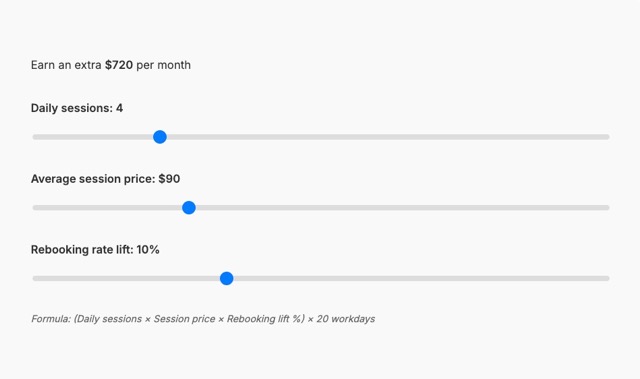
Calculate the ROI of MuscleMap for your massage therapy or PT practice with our interactive calculator and real examples.
Who MuscleMap Is For (and Not For)
4 min read
Determine if MuscleMap is the right fit for your massage therapy or PT practice with our comprehensive guide.
MuscleMap Alternatives
8 min read
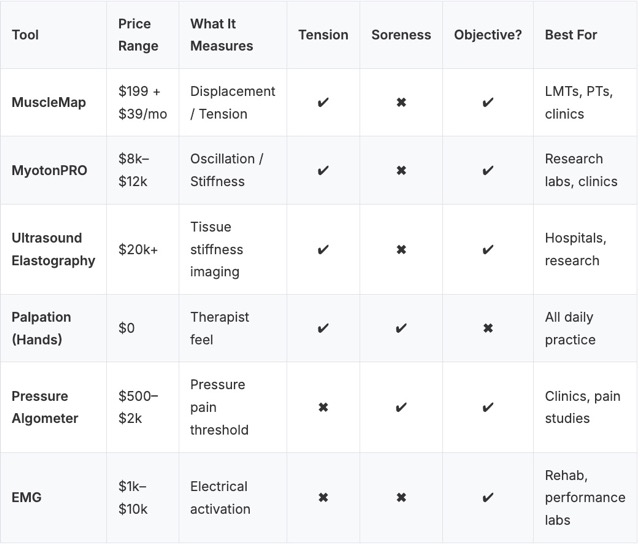
Compare MuscleMap to other muscle tension assessment methods like MyotonPRO, elastography, and algometers.
The Limitations Of MuscleMap (and why we still built it)
7 min read
Transparent discussion about what MuscleMap can and can't measure, and why we believe it's still valuable.

Why Your Muscles "Feel Tight" (Even When They Aren't)
7 min read
Learn the science behind muscle tension perception and why subjective feelings don't always match objective measurements.
How Tension Scores Work
5 min read
A technical breakdown of how MuscleMap calculates tension scores from force and displacement measurements.
What Is MuscleMap's Money-Back Guarantee?
2 min read
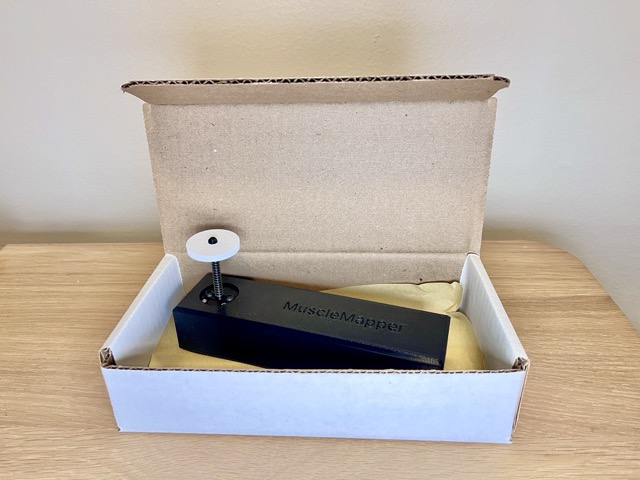
Learn about our hassle-free 14-day money-back guarantee. Keep the device, full refund.